|
I have been thinking about my grandmothers a lot this year. They were both fierce, fun-loving, strong, take-charge women. They found ways to be powerful in times and situations where women were denied power. And they were both survivors. They took what life gave them—all the trials and tribulations along with all the joys—and lived life to the fullest. My grandmothers were friends when my parents were children, and they shared a love of magic, laughter, and celebrations. With each passing year, I see more and more pieces of them reflected back at me when I look in the mirror. 2020 has been one of the hardest years of my life. Loss and heartbreak I didn’t think I could bear. Challenges I wasn’t sure I would survive. Literally. There is nothing like a major health scare drawn out for months because a global health pandemic shuts down all “non-emergent care” to throw one into an existential crisis. As I contemplated my life and tried to meet the challenges before me (hello COVID), I felt my grandmothers with me. Reminding me of everything they taught me when they were alive. About how to survive. How to live. How to love. And how to stay true to myself through it all. Grandma Cleo (my father’s mother) loved Christmas—she would plan for months to make stockings for all the grandkids. Actually, she loved all holidays and any excuse to gather people together and throw a party. So many of my childhood memories are filled with her voice, my large extended family, and lots of food. Her home was the place I felt most safe as a child. I grow irises in my backyard that came from bulbs from her yard. Each spring when they bloom, I feel her with me. She taught me how to be a hostess, how to welcome people into my home, how to gather people together with love. 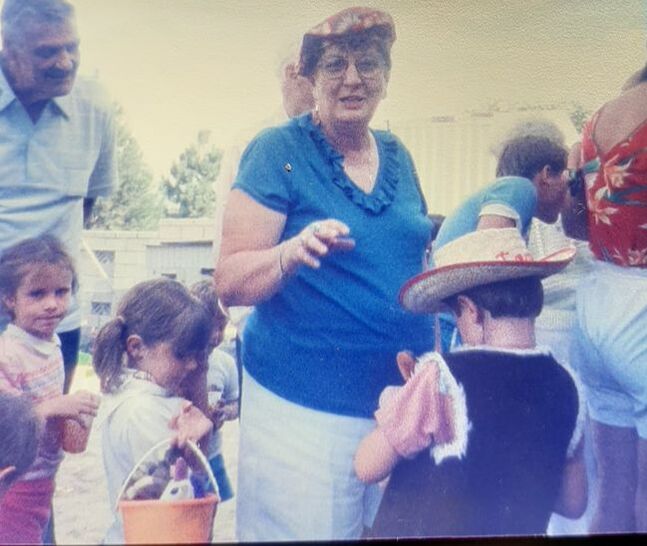 My Grandma Cleo at a family party. That's me with the pigtails. I love how my grandpa is leaning in--no one wanted to miss a word when Grandma talked, 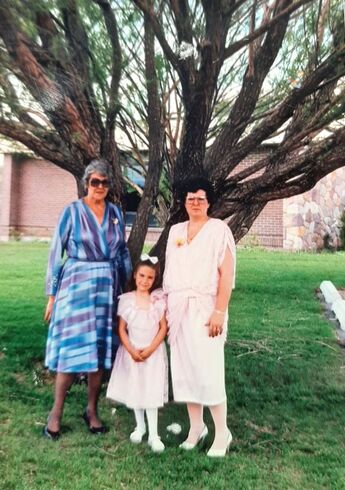 My Grandma Maxine, my mom, and I all dressed up for Easter. Three generations of women. I refused to wear pink for my entire adolescence. I had my reasons. My Grandma Maxine, my mom, and I all dressed up for Easter. Three generations of women. I refused to wear pink for my entire adolescence. I had my reasons. Grandma Cleo was a storyteller of the best kind. She filled dozens of spiral ring notebooks with the stories she wrote. When I stayed the night at her house, I would beg her to tell me a story before bed. She was funny and captivating and knew how to work a crowd. And she was a rebel. Of the absolute best kind. She believed in going her own way and making her own magic. She encouraged my awkward, book-loving, sassy self. College was not the typical path for anyone in my family, but Grandma Cleo never doubted me. We spent late nights in her kitchen drinking tea while she told me stories of her own rebellions. Running away to work on the trolleys in San Francisco. Making her own choices about who to love and who to marry. She told me not to worry that I was more interested in school than other girls and to embrace my future. She taught me how to be the author of my own life. To be independent and strong-willed. To be a feminist.
My Grandma Maxine (my mother’s mother) lived far away so I didn’t get to spend as much time with her. And yet, members of my family frequently tell me I am so much like her. She loved to dance and sing and play the piano. She carried the weight of life’s traumas with a heavy heart, but when she was playing music there was a lightness in her. She loved the classic crooners—Elvis Presley, Roy Orbison, Dean Martin. When I listen to a Chris Isaak album or cut loose on a dance floor, I know she is with me. When I was a child and would visit my Grandma Maxine, I learned how to capture quiet moments with her. She was always an early riser. I knew if I got out of bed when the sun rose, I would find her on the porch, with a cigarette and a cup of coffee. Grandma Maxine was often surrounded by people and had a presence that was larger than life, but she shared her stillness with me in those early hours—stolen out of time. I thought of her often this summer, as I sat in my backyard with a cup of coffee and watched the sun rise. She taught me that each new day brings hope. That we have to quiet our heads and listen to what Mother Nature has to share with us. That no matter how heavy our burdens, we can always take a moment to breathe. As we continue to battle a pandemic that threatens the lives of our elders, it is more important than ever to pay tribute to the wisdom they offer us. Too often we push them away from us. Not knowing how to heal the wounds they have caused us. Afraid to face our own mortality. But we need their lessons. About how to find light in difficult times. About how to embrace the aspects of ourselves we fear that others may not understand or accept. About how to live life to the fullest. As the year draws to a close, let's all celebrate our grandmothers. Even if we are separated by distance and a pandemic. Even if they are no longer with us in body--whether our grief is new or old. They walk with us always, besides us and within us. To my grandmothers, with love, Britney 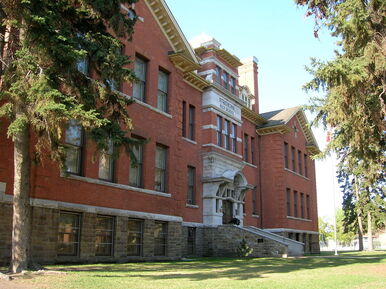 As the world continues to grapple with the COVID-19 pandemic, people in the United States are having important conversations and debates about safety in school. Is it safe to reopen schools for in-person learning? What policies and procedures need to be in place to ensure safety for students, teachers, and staff? While these are important and challenging questions, they are based on a false premise. That schools were ever safe places to begin with. Instead of scrambling to reopen buildings and slather everyone with hand sanitizer, we can use this global pandemic as a national wake up call. To deeply examine the roots of our educational system and work to build something new. The demand that students should learn in environments where they don't feel safe is foundational to the educational system in the United States. Schools in the US have always been used as mechanisms to reinforce inequalities. Many students have never felt safe in these environments and their fear is used as a weapon to attempt to force them to conform and assimilate. Those who don’t are often pushed out of the school system—often into the prison system, hence the school-to-prison pipeline. The history is long. The examples are many. Here’s a non-comprehensive list of students who have not felt safe in schools:
Many schools in their current forms do not even attempt to be safe spaces for children. They rely on harsh discipline and punitive measures to enforce rules. In one of my studies in Pittsburgh, Black girls described their schools as “prison-like” with hallway sweeps and in-school suspension rooms that are “cold, claustrophobic and prison-like.” But it does not have to be this way. If you are one of the people finding yourself arguing for safety in schools amidst a health pandemic, I invite you to the larger conversation. The conversation about abolitionist teaching, and liberatory approaches to education, and restorative practices in schools, and police-free schools, and schools without sexual harassment, and communities-in-schools. The conversations are happening, the work is happening. Join the scholars, and activists, and educators, and counselors, and parents, and students on the ground working for a revolution. As Bettina Love says: “We must struggle together not only to reimagine schools but to build new schools that we are taught to believe are impossible: schools based on intersectional justice, antiracism, love, healing, and joy.” Yes, we should advocate for physical safety for all the children and adults who work in schools. But I am uninterested in a world where we go back to business-as-usual once a vaccine is found. Real transformation of schools requires us to expand our imaginations to create a vision of new possibilities. I am fighting for schools that facilitate the physical, emotional, and spiritual safety for children. Schools that joyfully uplift the full, complex, and beautiful life of every single student. Britney G Brinkman, PhD Systems of policing in the United States are designed to be the enforcement arm of white supremacy. We need to abolish these systems. We need to rewrite the social contract between white people and systems of policing—be they local police, state militias, or the federal military. Yes. We need to hold individuals accountable. The four Minneapolis police officers who murdered George Floyd on video should be arrested and charged. Yes. There are good police officers. There are police officers who are genuinely trying to contribute to building safer communities. There are police officers who do soul-wrenching work to help children who have experienced sexual violence. There are even police officers who are actively engaged in anti-racist work (although far too few). But this is bigger than individuals. And the ongoing police violence against Black and Brown people is not a result of a few problematic people. It is the intended result of these systems. We White people have made a social contract with police. We give them power and in exchange they protect our white privilege. It is on us as White people to dismantle that contract. The United States would not exist without this social contract. The militia and military was used to murder indigenous families so white settlers could steal the land. Policing in the form of slave patrols was used to enforce the enslavement of African people, so that white landowners could amass wealth. Wealth that they passed down to generations of people who continue to benefit today. (If any of this comes as a surprise to you, I encourage you to learn more about the history of the United States. An Indigenous People’s History of the United States and Stamped from the Beginning are good places to start.) When President Trump tweeted that he would bring in the militia to shoot protesters in Minneapolis, we was following a long line of Presidents who have used systems of policing to quell resistance to white supremacy. When Amy Cooper lied to the police and claimed that a Black man was threatening her life because Christian Cooper asked her comply with the rules in the park, she was following a long history of white women using police to punish Black boys and men who challenge them. When the police murdered Breonna Taylor in her bed they were fulfilling their end of the social contract to use the “war on drugs” as a weapon to criminalize and jail Black communities. When White people support having police officers in schools, based on false claims that they will protect children from shooters, they exchange the safety of Black and Brown children for the privilege of gun ownership. We must demand change. We must abolish these systems. We must end this social contract and develop new ways to foster safety in our communities. Safety for ALL members of our community. Justice for George Floyd. You have probably heard the saying, “Love isn’t something you feel. It is something you do.” As John Mayer said: Love ain't a thing 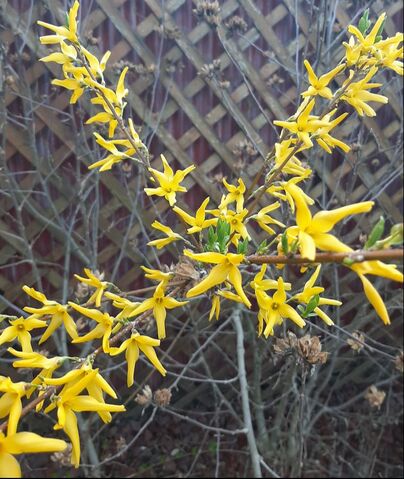 During the past few weeks, I have thought a lot about hope. How hope is also more of a verb than a noun. Hope is something we do. How do we practice hope during a pandemic? I’ve had a lot of feelings since the coronavirus hit the US.
And yet. Sunday was a beautiful day. The sun was shining, the air was warm, birds were singing. It was an ideal spring day. So I decided to do some work in the garden. Gardening in March, in the face of a pandemic, is certainly a practice of hope. As I pulled weeds, and moved rocks to expand my garden bed, and planted seeds, I thought about hope. I have no idea if I will be able to tend to this garden in two weeks. Or two months. Or two years. I continued anyway. Preparing the soil the best I could for what comes next. For the things I can attend to and the things outside of my control. While I worked in the sun, I realized that my social justice work has taught me how to practice hope. Practicing hope isn’t about feeling hopeful. It is about cultivating the conditions for change. It requires a bit of faith in something greater than ourselves. A vision for what can be. And a willingness to give of ourselves toward that better future. In my research, teaching, and advocacy work, I am constantly practicing hope. Engaging in work to uproot inequalities and plant the seeds of change. Even when I doubt that I will live to see the fruits of that labor.
The pandemic has made (more) visible the deep problems of our society.
I could go on. Trust me. I don’t fault people for focusing their energy and resources right now on surviving the coronavirus pandemic. People we love are going to become ill. People we love are going to die. We don’t know how long we are going to be asked to live in social isolation. To adapt our lives for the best chance we have to “flatten the curve.” But I am not interested in going back to the “way things were.” When we accepted losing people to police shootings, and poverty, and intimate partner violence, and environmental racism. Now is the time to practice hope. To cultivate the conditions for change. Change within ourselves and within our systems. Now is the time to create a vision for a better future. And to dedicate ourselves to bringing that vision to life. Britney G Brinkman, PhD. 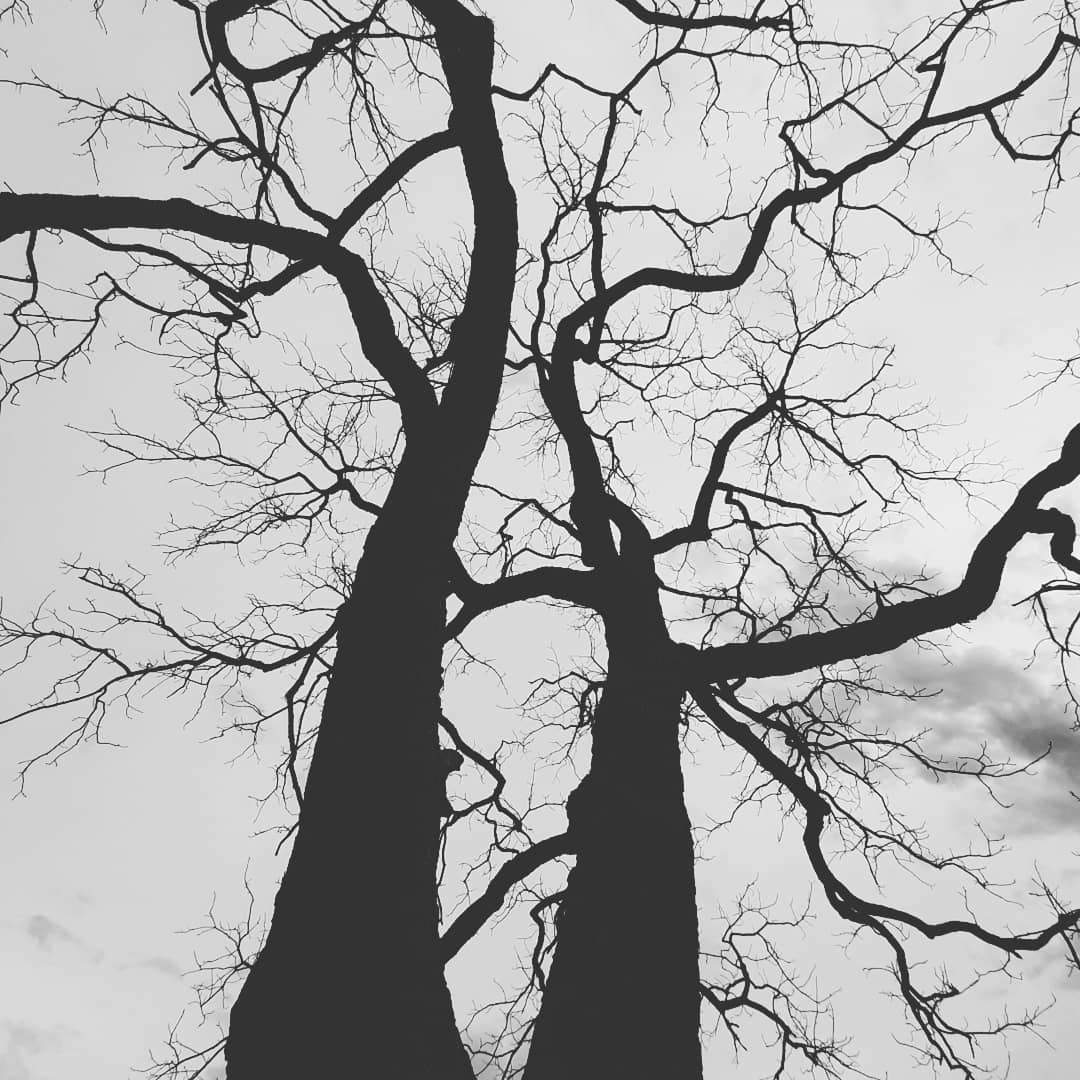 I have been thinking a lot about trees lately. I was recently gifted a copy of the novel The Overstory from someone who (correctly) guessed that I have a thing for trees. The book is one of the most beautifully written stories I have ever read. In the beginning of the book I paused after each chapter to just let the words sink in. The novel has changed the way I look at trees. And I am used to looking at trees. Hiking and walking in the woods is perhaps my favorite pastime and most essential self-care activity. There are days when I crave trees. Moments when I know I can’t solve some problem by thinking or feeling or obsessing. And I must walk instead. Preferably, among trees. With all the time I spend in the trees, I began to realize I often didn’t see the trees. “No one sees trees. We see fruit, we see nuts, we see wood, we see shade. We see ornaments or pretty fall foliage. Obstacles blocking the road or wrecking the ski slope. Dark, threatening places that must be cleared. We see branches about to crush our roof. We see a cash crop. But trees - trees are invisible.” We’ve been having such a mild winter here in Pittsburgh. I grew up with snow. Lots of snow. And never thought I was particularly fond of it. But this year, I have yearned for snow. I have judged the barren trees, thinking, “They would look better with snow on them.”
I decided to stop judging and I start looking at trees. Really looking at them. And I have become grateful for the lack of leaves. The absence of snow. The opportunity to see—well—the tree. And I realized that trees are beautiful. Without all their ornaments and foliage. They are amazing, intricate, complex, beings. We are so like the trees. It is when we are laid bare that our connections and branches and possibilities are made most visible. It is hard to be made visible. To be seen. We spend so much of our time and energy and money covering ourselves. With the latest fashions. With humor. With false bravado. With attempts to be what we think others want to see in us. In the work I do as a psychologist, a teacher, an advocate for social justice, I know that interactions with others can be contentious. Being seen means being vulnerable. It is scary to be seen. Terrifying. But also, the most magical experience in the world. To be truly seen by another. Just like trees, we can not remain bare all the time. But perhaps we can learn lessons from trees. To shed those things that no longer serve us. To pause and rest, before we grow anew. To allow ourselves to be seen exactly as we are.
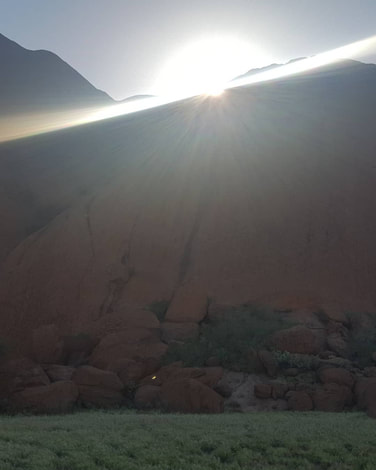 Uluru, base walk at dawn, December 2018 Uluru, base walk at dawn, December 2018 Some people might say I am a bit obsessed with the night sky. I have a lounge chair in my backyard that I affectionately refer to as my “stargazing chair.” Many years ago, I attended an astronomy program while on vacation in Yellowstone National Park with my parents. Astronomers from a university in Montana facilitated a stargazing event during the new moon. So many of us live in or near cities, that we forget how much our night sky is impacted by light pollution. Looking at the galaxy on a dark night in the middle of our first national park changed the way I have seen the stars ever since. Experiencing the stars this way reminded me of the vastness of the Universe and our connections within it. Last December I was fortunate enough to spend three weeks in Australia—a country I have been fascinated with since my childhood. There were so many incredible moments on my trip, but one of them that stood out for me was stargazing in Uluru. I was in central Australia, hours away from the nearest town. I felt an incredible sense of awe when I found myself lying on a bench, looking at a night sky that was foreign to me. I asked the Australian I was with to tell me about the constellations. I wanted to know—what do you see when you look up? Tell me the story of your stars. Over this past year, I have been especially interested in exploring the role of place and place-based knowledge in my work—as a Psychologist, an activist, and a White woman doing equity work with and on behalf of Black girls—as well as in my personal life. I love Pittsburgh and feel at home here. But it amazes me that when I moved here 10 years ago, no one questioned whether the knowledge I had could be applied to work in a city I had only been to for my job interview. There was an inherent assumption that three little letters after my name was sufficient. Knowledge I acquired from an academic system rooted in White European philosophical values is held in higher regard than knowledge that is place-based, indigenous, rooted in communities. This is the ongoing colonization project. When we talk about settler colonialism in the United States, we often focus on historical events. The ways my dad’s English ancestors displaced my mom’s Cherokee ancestors and stole their land. Even when we talk about the ongoing impacts of settler colonialism—intergenerational trauma, economic disenfranchisement, institutional and interpersonal racism against Black and Brown people—we often neglect to fully examine our own participation in the ongoing project of the colonization of knowledge. Back to our night sky. In the United States (and it turns out in Australia) many constellations are known by Greek and Roman names—connected to myths that have no connection to the land they shine above. There are, of course, indigenous names and stories of the stars. These names and stories matter—they convey important cultural messages, they teach lessons about navigation, they offer guidance on how to interact with plants and animals. Star knowledge connects us—to each other, to our ancestors, to the whole universe. In Canada, scientists are leading a project to relearn the star stories of indigenous peoples. Star knowledge wasn’t accidentally left behind. It has been suppressed, invalidated, and erased as part of the projects of cultural genocide and forced assimilation. The colonial project harms us all, cutting us off from deep, intuitive knowing rooted in wisdom of our communities. Decolonizing requires active resistance. It is the work of reclaiming our connection to place. To the land. To the sky. To each other. Britney G Brinkman, PhD. “The universe is both orderly and chaotic. We understand it to a point, and then there is mystery. And that is not linear or cumulative. There is no eventual elimination of mystery. There will always be mystery. And knowledge. Humans are both understandable and mysterious.”  I have never been a big fan of the 4th of July, nor have I ever been especially patriotic. During my senior year of high school, I refused to say the pledge of allegiance because I did not, in fact, pledge my allegiance to the USA. I am sure it was against school rules for me to refuse, but luckily my homeroom teacher was the advisor of our school newspaper ( I was the editor at the time), and he decided I was generally a good kid who usually followed the rules and let me enact my principles on this one. This year, my Facebook feed is blowing up with stories about people planning to protest today’s festivities or wondering how they can possibly celebrate America. How can we celebrate when there are children sitting in cages in concentration camps, and families trying to get by on minimum wage and no health insurance, and Black people being murdered by the police, and Indigenous communities being ravaged for oil, and reproductive rights being dismantled? How can we celebrate when we have a President who lies, rapes, cheats, and steals? While protesting the day is certainly a viable option (and mine), I can understand why people would want to enjoy a holiday with their friends and family. In this country in particular where we claim bragging rights for working too much and sleeping too little and where we don’t have mandatory paid sick leave or vacation, I do not begrudge people the holiday. Instead, I say—lean into it. That’s right—if you are going to celebrate the 4th of July, really celebrate it. Take time to talk about why the holiday exists and reflect on what it means today. Read the Declaration of Independence out loud at your BBQ and ask people to discuss it. Yes, they will moan and groan as they do at Thanksgiving when you ask them to share something for which they are grateful (for thoughts about Thanksgiving, read here), but hey, that is the price of admission. Really, though. When is the last time you read the Declaration of Independence? Don’t get me wrong; I don’t think it is a perfect document nor one written with divine inspiration. That most famous line…that all men are created equal… is rather problematic (how about us women?) and has never been realized for people of color. Nevertheless, there are some pretty important things in the document that you should consider—including a long list of the wrongs done by the King of England, which are eerily and terrifyingly familiar. The Declaration is also a reminder to the people that we have an obligation to hold our government accountable: “That whenever any Form of Government becomes destructive of these ends, it is the Right of the People to alter or to abolish it, and to institute new Government, laying its foundation on such principles and organizing its powers in such form, as to them shall seem most likely to effect their Safety and Happiness.” So on this day, I say, take stock. Talk to your friends, and family members, and co-workers, and children about how our nation is doing. Go ahead and honor and celebrate the things you think we are doing well—I am certainly grateful that I have the right to criticize the government without going to jail. But don’t forget that our rights are fragile. Talk about what we can do better as a nation, and how you personally are going to contribute. We each have important roles to play in improving our communities. If you are already involved in efforts to fix social problems then great! Keep it up! Talk to your BBQ peeps about it! You just might motivate and inspire them. And if you are feeling a little overwhelmed with all the issues facing this country and don’t know where to start, just know that you are not alone. But you don’t have to solve everything at once. As Margaret Wheatley and Deborah Frieze say in their book “Walk Out, Walk On:” Start anywhere, follow it everywhere. Big change starts with small changes made by people who are truly committed. Pick an issue that matters to you. Work locally. Contribute your unique talents and strengths. Build coalitions. The Declaration of Independence ends: “We mutually pledge to each other our Lives, our Fortunes, and our sacred Honor.” What do you pledge to do? Britney G Brinkman, PhD 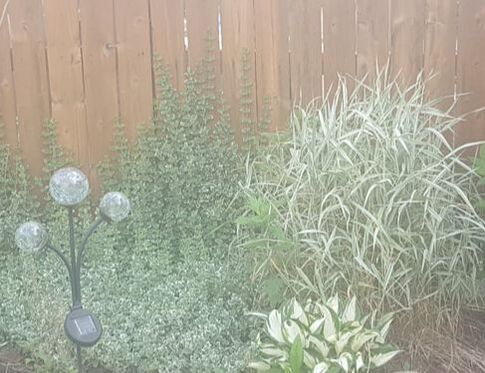 I grew up in an arid climate, where people wasted water to maintain grass in their yards. Because a well-manicured lawn is the hallmark of the middle class—as American as pulling yourself up by your bootstraps.
As someone who grew up in a working class family in a working class neighborhood, I know how important it is to avoid being accused of “letting my yard go”. Now, I own a house in a city where it rains so much that I find myself empathizing with the wicked witch of the west. Maybe she wasn’t evil. Maybe she just couldn’t take One More Day Of Rain. Now, I find myself defining grass as a weed. According to Good Weed, Bad Weed, a weed is merely a plant out of place. Grass is growing out of control in my vegetable garden. But, I am having a terrible time digging it up. How can I uproot and discard (in this case, compost) a plant that was coveted during my childhood? Also, I would like to eat the sweet peas that I planted in that garden bed, whose stalks are currently being choked out. I realized that it is time to shift my entire perspective about my garden. Instead of blindly pulling up the plants I had decided didn’t belong, I looked for a way to balance out the grass and the sweet peas. I am trying to cultivate a different relationship to the land. One in contrast to the American dream of ownership and control; and white picket fences and perfect lawns. I sometimes joke that I am going to write a book called “The Lazy Gardener.” At my previous house, I built garden plots in my front yard because the backyard was shaded by a large beautiful tree. When it came time to plant, I was often surrounded by neighbor children, begging to help. It seemed way more important to encourage their involvement than to ensure that seeds were planted in neat rows. It was a fantastic opportunity to practice valuing relationships over perfection. And the plants grew just fine. Because nature knows how to do her thing without us. Which is really the whole point. The less I try to control things, the better. Despite the increasingly common and severe weather events related to global climate change, many of us are stubbornly clinging to the belief that we can—and should—own and control the land. That belief and the accompanying behaviors is killing the planet. This spring, I had one of my classes read the article “Decolonization is not a metaphor.” It was a tough read, but my students engaged with it deeply and openly. The authors challenge the readers to consider what it truly means to decolonize North America. To question the whole system of land ownership. For anyone raised in a settler colonial nation, it requires us to expand the bounds of our imagination. To consider new ways of being with ourselves, others, and the land. Perhaps avoiding weeding the garden can be the ultimate act of resistance. Resistance against the system of capitalism that creates poverty and shames those who live in it. Resistance against a system of capitalism that encourages us to buy, consume, control, throw away. Resistance against a system of colonization that says some people get to “own” the land and other people are “illegal.” Resistance against a system of colonization that encourages people to become disconnected from the land, from each other, from their own bodies. Adrienne Maree Brown’s book Emergent Strategy teaches us to explore methods of social change informed my processes in nature. It is poetic and brilliant and inspirational. One of the principles of emergent strategy is that small is good—small is all. The large scale is a reflection of the small scale. How I treat one blade of grass reflects how I treat all beings in the world. Imagine what could happen if we all stop weeding our gardens? Britney G Brinkman, PhD I have never been a patriotic person. In high school, my homeroom teacher ignored the fact that I refused to stand and say the Pledge of Allegiance, although I am fairly certain there was an explicit rule stating that I should. He knew me well enough to realize I was genuinely protesting mandated nationalism, not being a teenage rebel. Times haven’t changed much. Recently, a Latina high school student in one of my research studies shared a story of her decision to protest anti-immigrant sentiment when she led the school-wide Pledge of Allegiance by ending it with: Liberty and justice for some On this 4th of July, many of my friends are asking themselves what to do with the day. They balk at the idea of celebrating a nation that seems so far from their ideals. In Pittsburgh, there are ongoing protests about the shooting--murder--of an unarmed Black 17-year-old boy by a White police officer. We are asking ourselves what we can do to end the separation of families at our borders and how to return thousands of detained children to their families. We fear the erosion of voting rights, reproductive rights, rights for LGBTQ people, the continued destruction of the environment, and so much more with the seemingly inevitable changes to the Supreme Court. What can we possibly celebrate? This morning my yoga teacher (a woman of color and immigrant to the US) asked our class, “What does it mean to celebrate Independence and Freedom? Who are you and who do you want to become?” And I pose the question to all of us, Who are we as a nation, and who do we want to become? The problems with the United Stated did not start with the Trump administration, although certainly we must remain vigilant against racist, sexist, homophobic, and classist policies and values that appear to be core to his administration. But if we genuinely ask ourselves who we are, we must acknowledge that we are a nation founded on state sanctioned violence against black and brown bodies. That the promises of liberty and justice have only ever been available to some. The United States of America would not exist without slavery. The United State of America would not exist without genocide of Indigenous peoples. We are a nation defined by white supremacy, patriarchy, and capitalism. It is easy to be disillusioned and discouraged. But perhaps, celebrating Independence can mean asking ourselves, as a nation, who do we want to become? Can we become a nation that truly manifests the principles of life, liberty, and the pursuit of happiness for ALL people? Can we become a nation where we celebrate freedom from the prison industrial complex, and the military industrial complex, and state sponsored wealth inequality, and gender inequity, and homophobia, and transphobia, and so much more? Today, I will spend time with friends and family. Not celebrating a lie, but building community. Fostering the genuine relationships with people who encourage me to work for change, challenge me to do better, and support me when I want to give up. I will spend the day breathing, and resting, and making time to reflect on who I am and who I want to become.
And I will get up tomorrow and continue to fight to build a nation we can believe in. A nation we can celebrate. Britney G Brinkman, PhD. Ensuring that schools are safe spaces is essential to enable all students to learn and thrive. We appreciate that school safety and creating a positive and supportive school culture are priorities for Pittsburgh Public Schools. Safety is a top priority for us as well, which led us to engage in listening sessions with girls to hear about their experiences of feeling safe (or not) within school. During these sessions conducted with students from Planned Parenthood and Gwen’s Girls, students shared that they are not safe at school, that sexual and other forms of harassment from classmates, teachers, and staff is a daily occurrence, that this experience is pervasive and severe, and that it is interfering with their ability to thrive. This conduct is common and often unchallenged. Additionally, students involved in the Women and Girls Foundation’s GirlGov program talked with teachers in schools who said they lack sufficient information on how to effectively respond to or report sexual harassment. Numerous national studies have shown that students, especially girls, experience sexual harassment frequently within their schools. The American Association of University Women study found that of 1,965 students surveyed, 48% of experienced sexual harassment during the 2010-2011 school year. We believe that all schools in Allegheny county can and MUST do better to prevent and respond to sexual harassment. As the #MeToo movement continues to garner national and international attention, we feel this is a crucial time to address sexual harassment and other forms of harassment within Pittsburgh Public Schools. As the Black Girls Equity Alliance (BGEA)—a coalition comprised of individuals, community-based organizations, universities, and government entities that work with Black girls and acknowledge that their lives and experiences are unique within existing societal constructs—our mission is to eradicate inequities affecting Black girls in Allegheny County. Members working on this topic include representatives from Gwen’s Girls, Planned Parenthood of Western PA, the Women’s Law Project, FISA Foundation, GirlGov, PAAR, YUIR Pittsburgh, other organizations, universities, and government entities. We invite the Pittsburgh Board of Public Education to collaborate with us to eradicate sexual and other forms of harassment within schools that impacts all students, regardless of gender identity. In particular, we ask that the Pittsburgh Board of Public Education:
Gwen’s Girls
Britney G Brinkman, PhD Allyce Pinchback Amanda Cross, PhD Elizabeth Miller, MD, PhD Jose Garth FISA Foundation Planned Parenthood of Western PA Women and Girls Foundation Pittsburgh Action Against Rape (PAAR) Women’s Law Project YUIR Pittsburgh Christine Gordon Sara Goodkind, PhD Katie Horowitz American Friends Service Committee PGH Pittsburgh for CEDAW Coalition Julie Evans Betty Braxter, PhD Jody Figas Julianna Wegner M. Shernell Smith Jessica Ruffin Lynn Knezevich Alison Hall Azadeh Masalehdan Block, PhD Education Law Center Amanda Neatrour Melissa Swauger, PhD |
AboutEMPOWERTAINMENT aims to take a critical look at media in regards to how gender and women/girls are portrayed. From popular articles, videos, and websites, to original submissions, we want to not only examine the media and its relation to gender, but help shift it. Archives
November 2017
Categories |
 RSS Feed
